

Key Takeaways
| Health Risk | Impact | Prevention |
|---|---|---|
| Skin Cancer | 60% higher melanoma risk for those who start indoor tanning before age 35 | UV-blocking window film, avoid tanning beds |
| Premature Ageing | UVA rays penetrate standard glass at up to 74%, causing wrinkles and age spots | Professional window film installation |
| Eye Damage | Cataracts, macular degeneration, and eyelid cancer from UV exposure | UV-protective window treatments |
| Indoor UV Sources | Windows, tanning beds, certain artificial lighting | Comprehensive UV protection strategy |
| Vitamin D Myth | Tanning beds provide no health benefits despite industry claims | Safe dietary sources and supplements |
Most Costa Blanca homeowners understand the importance of sun protection outdoors—we’ve all experienced the intense Mediterranean sun during August and September. What surprises many of our customers, though, is learning that harmful UV radiation doesn’t stop at their front door. At Solar Guard we’ve spent over two decades helping property owners across the Costa Blanca protect themselves from indoor UV exposure, and the health risks are more serious than most people realise.
The Hidden Danger: UV Rays Through Your Windows
Here’s something that shocked me when I first started in this industry back in 2002: standard window glass blocks most UVB rays but allows up to 74% of UVA radiation to pass straight through. During my years installing window film across Almoradi, Benidorm, La Finca Golf, and surrounding areas, I’ve met countless homeowners who’ve developed sun damage on one side of their face—the side that faces their favourite window seat or home office setup.
UVA rays are particularly insidious because they penetrate deeper into the skin than UVB rays. Whilst UVB causes sunburn, UVA contributes to premature ageing, wrinkles, age spots, and—most seriously—increases your risk of skin cancer. At Solar Guard we regularly work with customers who’ve noticed accelerated skin ageing on their arms, face, or neck after years of sitting near large glass doors or conservatory windows.
One customer in a villa near Benidorm told me she’d always been diligent about wearing sunscreen outdoors but never considered protection inside her home. After noticing significant sun damage on her left arm—the one closest to her living room window—she contacted us about UV-protective window film options. The transformation wasn’t just about comfort; it was about protecting her long-term health.
Skin Cancer Risk: The Numbers Don’t Lie
The statistics around UV exposure and skin cancer are genuinely alarming. Research shows that indoor tanning can increase the risk of basal cell skin cancer by 24% and squamous cell skin cancer by 58%. But here’s where it gets even more concerning: those who first used tanning facilities before age 35 face approximately 60% higher risk of developing melanoma—the deadliest form of skin cancer.
At Solar Guard we’ve worked with families who’ve experienced skin cancer firsthand, and it’s changed how they think about UV protection in their homes. The Costa Blanca’s climate means we’re dealing with intense UV radiation from March through November, with peak exposure during the summer months. Properties with large glass doors opening onto terraces, conservatories, or nayas face particularly high indoor UV levels.
What many people don’t realise is that cumulative exposure matters enormously. You might spend two hours each morning in your conservatory reading the paper, or work from a home office with floor-to-ceiling windows overlooking your garden. Over months and years, that daily exposure adds up significantly. The damage isn’t immediately visible—it develops silently over time until one day you notice the leathery texture, the age spots, or worse, a suspicious mole that needs medical attention.
Understanding how to reduce heat, glare, and UV rays in your home isn’t just about comfort—it’s a genuine health investment that protects you and your family from preventable harm.
Beyond Skin: The Eye Health Threat You’re Ignoring
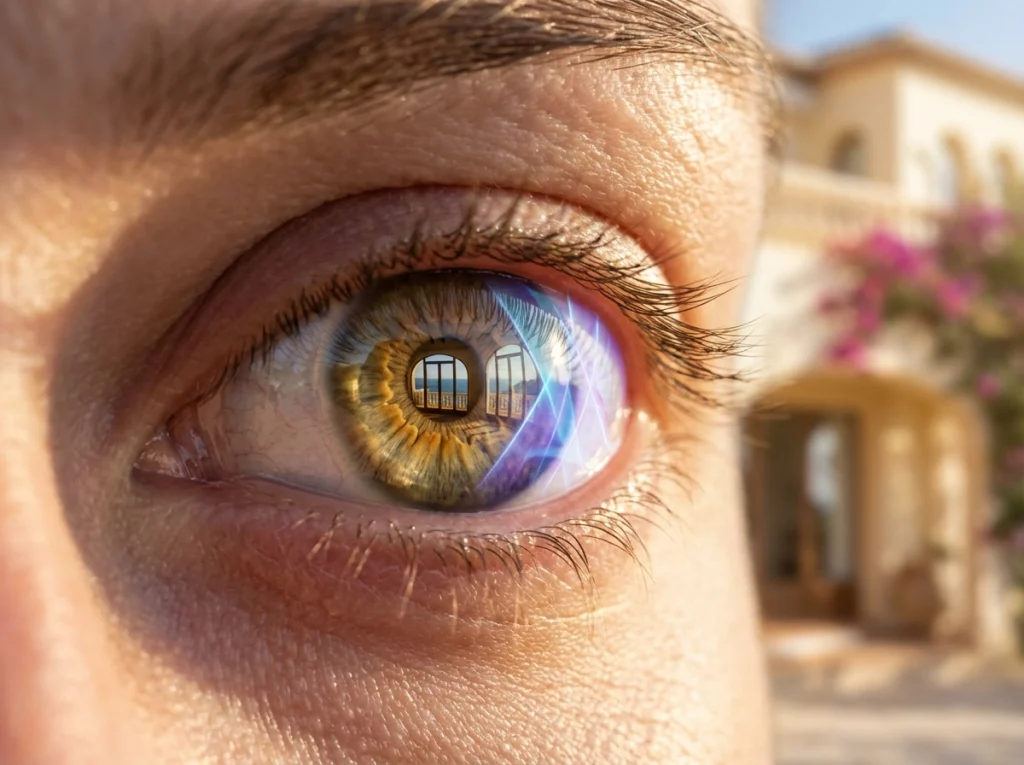
Whilst most homeowners focus on skin protection, the impact of indoor UV exposure on eye health is equally serious but far less discussed. UV radiation contributes to cataracts (clouding of the eye’s natural lens), macular degeneration (a leading cause of vision loss in older adults), and even skin cancer on and around the eyelids.
I remember installing film in a property near La Finca Golf where the owner had recently undergone cataract surgery. His ophthalmologist had specifically recommended UV-protective window treatments for his recovery period and long-term eye health. The owner was surprised to learn that UV exposure from windows could affect his eyes—he’d assumed the main risk came from direct sunlight outdoors.
The challenge with eye damage from UV exposure is that it develops gradually without immediate symptoms. You won’t feel your eyes “burning” the way your skin might after too much sun. The damage accumulates silently over years until vision problems emerge. At Solar Guard we’ve worked with several customers who’ve developed UV-related eye conditions and wish they’d installed protective window film decades earlier.
Properties with conservatories face particular risks because the extensive glazing creates a greenhouse effect with concentrated UV exposure. We’ve installed film in dozens of conservatories across the Costa Blanca, and owners consistently report not just temperature improvements but also reduced eye strain and fatigue from spending time in these spaces.
Other Indoor UV Sources in Your Costa Blanca Home
Whilst windows represent the primary source of indoor UV exposure for most homeowners, other artificial sources exist that many people overlook. Certain types of artificial lighting—particularly older mercury vapour lamps and some halogen lights—emit UV radiation as part of their spectrum. We’ve encountered this in properties with older lighting systems, particularly in garages, workshops, and outdoor covered areas.
Nail curing lights used for gel manicures represent another concentrated UV source. If you’re someone who does regular gel manicures at home, you’re exposing your hands to UV radiation that contributes to premature ageing and potentially increases skin cancer risk on your hands and fingers.
For homeowners with welding equipment or workshops, the UV exposure from welding arcs is intense enough to cause photokeratitis—essentially a sunburn of the cornea that’s extremely painful. Proper protective equipment is essential, but many people don’t realise that reflected UV radiation can affect others in the vicinity as well.
At Solar Guard we take a comprehensive approach to UV protection. Whilst our primary focus is window film installation, we educate customers about all potential UV sources in their homes. Understanding the complete picture helps property owners make informed decisions about protecting their health.
The Vitamin D Myth: Don’t Fall for Industry Marketing
One argument we occasionally hear from homeowners hesitant about UV-blocking window film is concern about vitamin D production. The tanning industry has promoted the idea that UV exposure—whether from tanning beds or unprotected sun exposure—is necessary for vitamin D synthesis. This is dangerously misleading marketing that ignores safer alternatives.
Yes, your body produces vitamin D when skin is exposed to UVB radiation. However, the amount of exposure needed is minimal—typically just 10-15 minutes of sunlight on your arms and face several times per week. You don’t need to sit in front of unprotected windows for hours, and you certainly don’t need tanning beds.
At Solar Guard we’ve worked with customers across the Costa Blanca who’ve expressed this concern, and the solution is straightforward: get your vitamin D from dietary sources (fatty fish, fortified milk, egg yolks) and supplements if needed. Your GP can test your vitamin D levels and recommend appropriate supplementation. This approach provides the health benefits without the cancer risk.
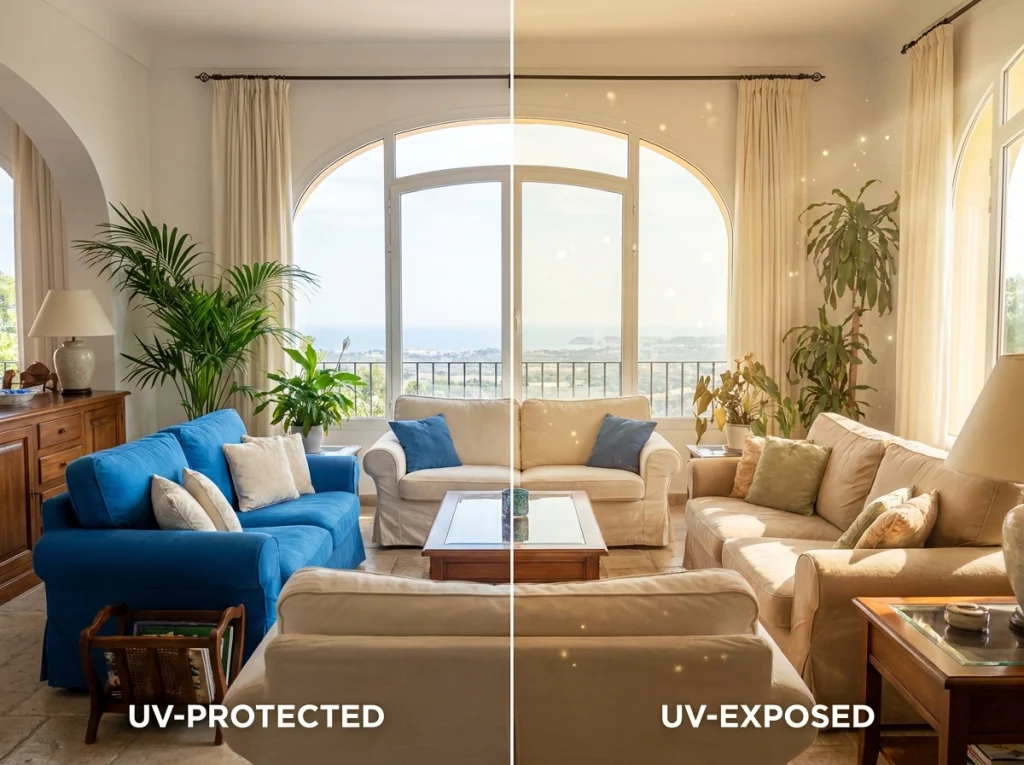
I’ve had customers tell me they’re worried about blocking “healthy sunlight” from their homes. The reality is that the health benefits of UV-protective window film far outweigh any theoretical vitamin D concerns. You’ll still have natural light—our films don’t darken rooms significantly—but you’ll block the harmful UV radiation that causes skin cancer, premature ageing, and eye damage.
Real-World Protection: What We’ve Learned After 22 Years
At Solar Guard we’ve installed window film in thousands of properties across the Costa Blanca since 2002, and the feedback from customers regarding health benefits is consistently positive. People report reduced skin sensitivity, less eye strain, and peace of mind knowing they’re protecting their families from harmful UV radiation.
One customer in Almoradi had developed significant sun damage on her face and arms from years of sitting in her conservatory each morning. After we installed UV-protective film, she noticed that her skin stopped developing new age spots and the existing damage didn’t worsen. Her dermatologist confirmed that blocking indoor UV exposure was a crucial step in preventing further damage.
Another family with young children contacted us specifically because of skin cancer concerns. The parents wanted to create a safe indoor environment where their kids could play near windows without accumulating harmful UV exposure. We installed film throughout their villa, including the large glass doors opening onto their terrace. The parents told us it gave them genuine peace of mind knowing their children were protected.
The Costa Blanca’s climate makes UV protection particularly important. Our intense summer heat means many homeowners spend more time indoors during peak UV hours, often near windows or in conservatories. Without proper protection, you’re still receiving significant UV exposure even whilst trying to escape the heat outdoors.
Understanding different types of window films helps homeowners choose the right solution for their specific needs. Some customers prioritise maximum UV blocking, whilst others want to balance UV protection with heat reduction and glare control. At Solar Guard we assess each property individually and recommend films that address the homeowner’s primary concerns.
Frequently Asked Questions
Can UV rays really damage my skin through windows?
Absolutely. Standard window glass blocks most UVB rays but allows up to 74% of UVA radiation to pass through. UVA rays penetrate deeper into the skin and contribute to premature ageing, wrinkles, age spots, and increased skin cancer risk. At Solar Guard we’ve worked with numerous customers who’ve developed sun damage on one side of their face or body from years of sitting near windows. Professional UV-protective window film blocks up to 99% of harmful UV rays whilst still allowing natural light into your home.
How does indoor UV exposure compare to outdoor sun exposure?
Whilst outdoor UV exposure is more intense, indoor exposure is insidious because it’s constant and often overlooked. If you spend several hours daily near windows—working from home, reading in your conservatory, or relaxing in your living room—the cumulative exposure over months and years is significant. The Costa Blanca’s intense sun means indoor UV levels are higher than in many other regions. At Solar Guard we’ve measured UV levels in conservatories and rooms with large glass doors that are surprisingly high, particularly during peak summer months.
Will UV-protective window film make my home too dark?
Not at all. Modern UV-protective films block harmful radiation without significantly reducing visible light transmission. At Solar Guard we offer films with varying levels of tint, from nearly clear options that block UV whilst maintaining maximum natural light to slightly darker films that also reduce heat and glare. Most customers are pleasantly surprised that their rooms remain bright and naturally lit after installation. We can show you samples and discuss options that match your preferences for light levels.
Is window film better than curtains or blinds for UV protection?
Window film provides superior UV protection because it works 24/7 regardless of whether you remember to close curtains or adjust blinds. Curtains and blinds only protect when closed, which means you’re choosing between natural light and UV protection. With professional window film installation, you get both—natural light floods your home whilst harmful UV rays are blocked. At Solar Guard we often work with customers who’ve relied on curtains for years but realised they were missing out on their beautiful Costa Blanca views and natural light. Film solves this problem completely.
How long does UV-protective window film last?
Quality window film professionally installed should last 15-20 years or more with minimal maintenance. At Solar Guard we use premium films with robust warranties and have installations from our early years that are still performing excellently. The film doesn’t degrade significantly over time, so your UV protection remains consistent throughout its lifespan. This makes it a cost-effective long-term investment in your health—far more economical than dealing with skin cancer treatment or premature ageing procedures down the line.
Can I install UV-protective film myself, or should I hire professionals?
Whilst DIY film kits exist, professional installation ensures proper coverage, eliminates bubbles and imperfections, and provides warranty protection. At Solar Guard we’ve corrected numerous failed DIY installations where homeowners ended up spending more money fixing problems than they would have spent on professional installation initially. Proper installation requires specific tools, techniques, and experience—particularly for large windows, conservatories, or complex glass configurations common in Costa Blanca