
Key Takeaways
| Benefit | Solution | Top Pick |
|---|---|---|
| Heat Reduction | Ceramic/nano films block 50-70% solar heat | Concord ComforTech Ceramic |
| UV Protection | 99% UV blocking prevents furniture fading | Solar Gard PureVue Ceramic |
| Privacy | Frosted films allow light while hiding interiors | VELIMAX Static Film |
| TV Glare | Low reflectance films improve screen visibility | LLumar CTX Series |
| Energy Savings | Quality films reduce AC bills by 20-30% | LLumar Vista EcoArc |
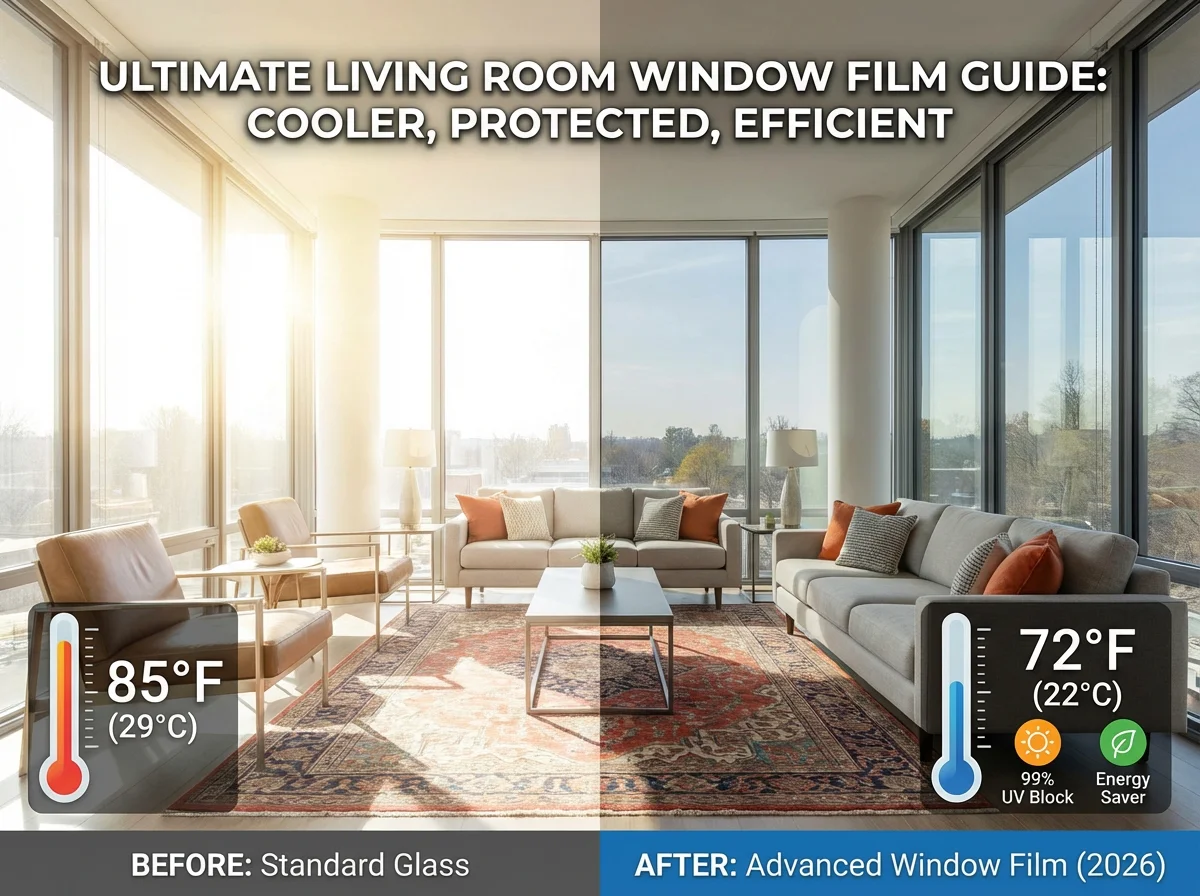
Picture this: Your living room’s large picture windows flood the space with natural light, but summer heat turns it into a sauna, TV glare ruins movie nights, and you’re worried about your expensive furniture fading – while nosy neighbors peek in through those same beautiful windows. Window films solve all these problems without blocking your gorgeous view or breaking the bank. Here’s what most people don’t realize: the right window film can drop your living room temperature by 10-15 degrees, cut your energy bills significantly, and protect thousands of dollars worth of furniture from UV damage. We’ve spent months analyzing top guides, reviews, and 2026 tests to rank the best window films for living rooms, focusing on what actually matters for family spaces.
Why Your Living Room Needs Window Film
The Hidden Costs of Bare Windows
Most homeowners don’t think about window films until problems hit. But here’s what’s happening right now in your living room: UV rays are slowly destroying your couch, carpet, and artwork. Even on cloudy days, up to 40% of UV radiation still comes through regular glass. I learned this the hard way when my 3000€ sectional sofa developed noticeable fading after just two years. The side facing our west-facing picture window looked completely different from the protected areas. That’s when I discovered that quality window films block 99-99.9% of UV rays – something regular glass simply can’t do. Privacy without sacrificing light is another game-changer. Residential window film lets you enjoy natural brightness while keeping your private moments private. Frosted and translucent films allow 80% of light to pass through while completely hiding what’s happening inside – perfect for street-facing living rooms.
Energy Savings That Actually Matter
The numbers don’t lie: nano-ceramic and Low-E films cut solar heat gain by 50-70%. For a typical living room with large south or west-facing windows, this translates to AC bill reductions of 20-30%. In hot climates, homeowners report their rooms staying 10-15 degrees cooler during peak afternoon hours. TV glare reduction is something most window film guides completely ignore. But if you’ve ever tried watching Netflix during a sunny afternoon, you know how frustrating screen glare can be. Films with low interior reflectance improve screen visibility dramatically – turning your living room into a proper entertainment space any time of day. Family safety matters too. Shatter-resistant window films hold glass together if something breaks, reducing injury risk from large living room windows. This is especially important if you have kids who play ball games or pets that might run into glass doors.
Installation Tips for Living Room Success
DIY Installation Guide
Tools you’ll need: Squeegee, utility knife, spray bottle, measuring tape, and patience. Plan for 1-2 hours per room, depending on window size. Start with a thorough cleaning – any dust or residue will show up as bubbles later. Mix a few drops of dish soap with water in your spray bottle. This soapy solution lets you slide the film into position before it permanently adheres. For large picture windows: Pre-cut kits save massive amounts of time and reduce waste. Measure twice, order once. Most quality films come with detailed instructions and phone support if you get stuck. The biggest mistake people make? Rushing the smoothing process. Work from center outward, using overlapping strokes with your squeegee. Take breaks – the film isn’t going anywhere, but your patience might run out. Safety tip: Window films add shatter resistance, but the installation process involves sharp knives around glass. Keep kids and pets in another room during installation.
Professional vs DIY Decision
Some films work great for DIY installation, others really need professional help. Different types of window films have varying difficulty levels. Go DIY for: Static cling films, basic tinted films, pre-cut ceramic kits under 60″ wide Call professionals for: Large architectural windows, curved glass, multi-story installations, security films The cost difference might seem significant, but professional installation often includes warranties that DIY can’t match. For premium ceramic films like Solar Gard PureVue, the installation warranty alone makes professional installation worthwhile.
Comparing Film Types for Living Room Use
Ceramic vs Traditional Films
Ceramic films use nano-technology to reject heat without metals. This means no interference with WiFi, cell phones, or radio signals – important for modern connected living rooms. The heat rejection is superior, and the clarity stays consistent over time. Traditional metalized films cost less but can interfere with electronic signals. In living rooms with smart TVs, streaming devices, and wireless speakers, this interference becomes annoying quickly. Dyed films are the budget option, but they fade over time and don’t reject heat as effectively. Fine for temporary solutions, but not ideal for permanent living room installations.
Privacy vs Energy Films
You don’t have to choose between privacy and energy savings anymore. Modern films combine both benefits effectively. One-way mirror films provide daytime privacy while rejecting heat. During the day, people outside see their own reflection while you see out clearly. At night, this reverses – so pair with curtains for evening privacy. Frosted films provide 24/7 privacy while still allowing 70-80% of light through. Perfect for living rooms facing busy streets or close neighbors. Frost and solar reflective film combinations give you both benefits in one product.
Heat Rejection Technology Explained
TSER (Total Solar Energy Rejected) is the most important number for cooling benefits. Look for 50% or higher for noticeable comfort improvements. Premium films hit 70%+ TSER. VLT (Visible Light Transmission) determines how dark your windows look. 70% VLT looks almost clear, 50% VLT is lightly tinted, 20% VLT is quite dark. Most living rooms work best with 40-70% VLT. UV rejection should be 99% minimum for furniture protection. This number is fairly standard across quality films – the difference is in heat rejection and appearance.
2026 Trends and Future-Proofing Your Investment
Eco-Friendly Innovations
The window film industry is embracing sustainability in 2026. Low-VOC adhesives reduce indoor air quality concerns, while recycled materials in film substrates appeal to environmentally conscious homeowners. Smart film technology is emerging but still expensive. PDLC (Polymer Dispersed Liquid Crystal) films can switch from clear to opaque with electrical control. Expect prices to drop significantly over the next few years as the technology matures. Health-focused films now include anti-microbial coatings and enhanced UV-C blocking. These features matter more in living rooms where families spend significant time together.
Future Installation Trends
AR measurement apps are making DIY installations more accurate. Point your phone at a window, and the app calculates exact film requirements. Some manufacturers now offer QR codes that link to installation videos specific to your film type. Subscription maintenance programs are appearing for professional installations. Annual cleaning and inspection services help films last their full warranty period while maintaining peak performance. The trend toward larger windows in modern homes makes quality window film more important than ever. Floor-to-ceiling windows look amazing but create serious heat and glare challenges that only high-performance films can solve.
Cost Analysis: Investment vs Savings
Upfront Costs Breakdown
DIY installation: 1€-6€ per square foot for film, plus tools (around 30€-50€ for basic kit) Professional installation: Add 3€-8€ per square foot for labor, but includes warranty and perfect installation Typical living room: 100-200 square feet of window area = 200€-1200€ total investment
Long-term Savings Calculation
Energy savings: 20-30% reduction in cooling costs during hot months. For a 200€/month summer AC bill, that’s 40€-60€ monthly savings. Furniture protection: UV blocking prevents thousands in furniture replacement costs. A 3000€ living room set could last 50% longer with proper UV protection. Payback period: Most quality installations pay for themselves in 2-4 years through energy savings alone. The energy savings from quality window film often surprise homeowners. It’s not just about comfort – it’s about significantly lower utility bills year after year.
Common Mistakes to Avoid
Installation Errors That Ruin Performance
Rushing the cleaning process causes 90% of bubble problems. Any dust, fingerprints, or cleaning residue will show up as permanent bubbles or cloudy spots. Wrong soap mixture can prevent proper adhesion. Use only a tiny amount of dish soap – too much makes the film slide around forever without sticking properly. Cutting too large wastes expensive film. Measure carefully and cut slightly smaller than the glass – you can always trim more, but you can’t add material back.
Product Selection Mistakes
Ignoring your climate leads to disappointment. Films designed for mild climates won’t handle intense desert sun effectively. Match the film’s capabilities to your actual conditions. Choosing on price alone usually backfires. Cheap films look bad quickly and often cost more to replace than buying quality films initially. Misunderstanding warranty terms causes problems later. Many warranties require professional installation or specific maintenance procedures. Read the fine print before deciding.
Installation Safety and Maintenance
Safety Considerations
Window film installation involves sharp knives, soapy surfaces, and often ladders or step stools. Plan for safety first – it’s not worth injury to save installation costs. Keep cutting tools sharp – dull blades require more pressure and are more likely to slip. Replace utility knife blades frequently during large jobs. Chemical sensitivity affects some people during installation. Ensure good ventilation and consider wearing gloves if you have sensitive skin.
Long-term Maintenance
Quality window films need minimal maintenance, but a few simple steps extend their life significantly. Clean gently with soft cloths and mild soap solution. Avoid ammonia-based cleaners that can damage film adhesives over time. Inspect annually for edge lifting or bubble formation. Early intervention prevents small problems from becoming expensive replacements. Document your warranty with photos and receipts. Many film warranties last 10-25 years but require proper documentation for claims. Understanding how window film blocks heat helps you maintain peak performance through proper care and cleaning.
Frequently Asked Questions
How long do window films last in living rooms? Quality films last 15-25 years with proper installation and care. Cheaper films may need replacement in 5-10 years due to fading, bubbling, or adhesive failure. Will window film affect my house plants? Most plants adapt well to filtered light through window film. UV blocking can actually protect sensitive plants from sun scorch while still providing adequate growing light. Can I remove window film later if I don’t like it? Yes, but removal difficulty varies by film type and age. Static cling films peel off easily, while permanent adhesive films require heat and patience to remove cleanly. Does window film void my window warranty? This depends on your window manufacturer. Many now accept window film installation, but check your specific warranty terms before proceeding. Will film block my WiFi or cell signal? Ceramic and dyed films don’t interfere with signals. Metalized films can cause some interference, but modern low-metal films minimize this issue. How dark will my living room look with window film? This depends on VLT percentage. Films with 70% VLT look almost unchanged, while 30% VLT creates a noticeable tint. Most living rooms work well with 40-60% VLT films. Can I install film on double-pane windows? Yes, but avoid dark films that might cause thermal stress. Ceramic films are safer for insulated glass units than dark metalized films. What’s the difference between residential and automotive window film? Residential films are designed for flat glass and UV stability, while automotive films handle curved surfaces and different legal requirements. Don’t use car tint on house windows. Transform your living room today by choosing the window film that matches your priorities – whether that’s energy savings, privacy, or furniture protection. The investment pays off in comfort, savings, and peace of mind for years to come.