
By Dean Newbury, Solar Guard SL. Window film installer on the Costa Blanca since 2002. Published 20 October 2025. Updated 10 November 2026.
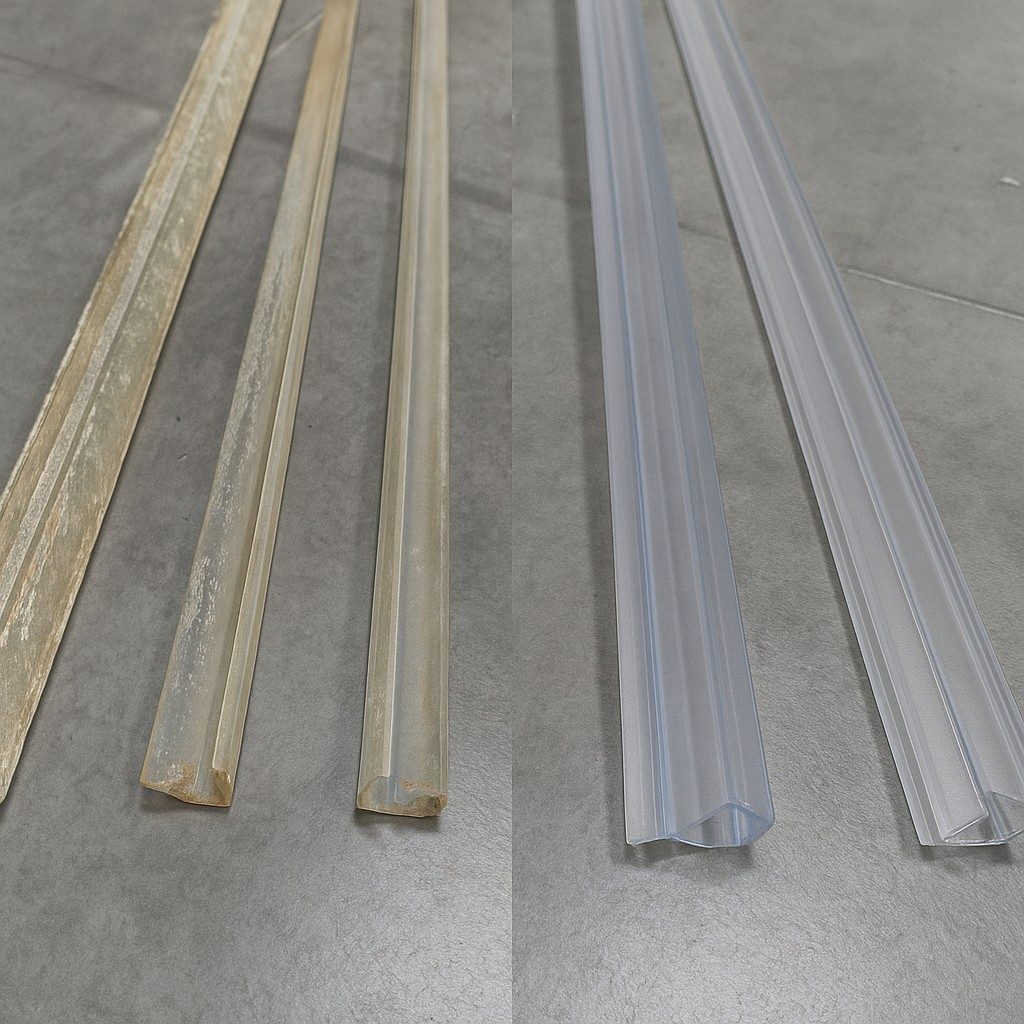
Glass curtain seals in Costa Blanca conservatories should be cleaned regularly, inspected a few times a year and replaced when they harden, crack, flatten or let in water. Strong sun, heat and salt air wear seals, but there is no fixed replacement interval. We are window film specialists, not seal fitters, so this guide covers what we see in conservatories and what to ask a specialist.
Key takeaways
| Topic | What to do |
|---|---|
| Inspect | Check seals a few times a year, and after storms, for cracks, hardness, gaps and water marks. |
| Clean | Wipe with a soft cloth and mild soap solution. Avoid solvents and abrasives. |
| Lubricate | Use only what your system manufacturer recommends. Petroleum-based products can damage rubber. |
| Replace | When seals are hard, cracked, flattened, loose or leaking, not by age alone. |
| Who fits them | Your glass curtain supplier or a specialist. Heavy glass needs proper handling. |
| Keep heat down | Shading and solar film reduce heat and UV on the glass. We do not claim film extends seal life. |
Why do seals wear out on the Costa Blanca?
Seals around sliding or folding glass panels have to stay flexible while keeping out rain and dust. Our climate is hard on them: strong UV, high summer temperatures, daily expansion and contraction, and salt in the air near the coast. South- and west-facing systems get the most sun. Poor fitting also shortens life, for example a profile that does not match the channel or seals that are stretched too tight.
What are the signs of a failing seal?
- Hard, brittle or chalky rubber that no longer springs back
- Cracks, splits or gaps, especially at corners and joins
- Seal pulling out of its channel or flattened along its length
- Daylight visible between a closed panel and the seal
- Whistling in wind, or draughts you can feel along the seal line
- Water marks, mould or a damp smell after rain
- Condensation that was not there before
A panel that is hard to move while the seals look fine is more likely a track or alignment problem than a seal problem.
How do I inspect my seals?
- Clean the glass and seals so you can see them clearly.
- Look along every panel, paying attention to corners and joins.
- Press gently with a finger. Healthy rubber or silicone is smooth and slightly springy. Sticky or rock-hard sections are failing.
- With panels closed, check for light gaps and feel for draughts.
- After rain, look for water marks or dampness on the frame and floor.
- If you want to test for leaks, use a hose on a gentle spray while someone watches from inside. Do not use high pressure.
How should I look after seals?
- Wipe seals with a soft cloth and mild soap solution, then dry them. Do not use solvents or abrasive pads.
- Keep drainage channels clear of leaves and dirt so water does not stand against the seals.
- Use a seal lubricant only if your system manufacturer recommends one, and avoid petroleum-based products on rubber.
- Do not patch cracked seals with tape or random adhesive. It rarely holds and can make proper replacement harder.
When should I replace them, and who should do it?
Replace seals when they are hard, cracked, flattened, loose or letting in water, and replace the whole run on a panel rather than patching if damage is widespread. Mixed old and new seals tend to perform unevenly. The panels are heavy, the correct profile matters and the work can affect weatherproofing and warranty, so use your glass curtain system supplier or a specialist. Ask what seal they will fit and why, and whether they will test for water tightness afterwards. We do not quote prices for seal work.
Where does window film fit in?
A glass curtain conservatory can get very hot and bright, which is what most of our customers contact us about. Solar control film reduces the heat, glare and UV coming through the glass, so the room is more comfortable and furnishings fade less. See our conservatory window film page and how window film blocks heat. Film suits many glass types but not all, because the US Department of Energy warns that films which mainly absorb heat can stress some glass units. We check your glass before recommending a film, and fitting should be by a professional: see why expert installation matters.
Frequently asked questions
How often should glass curtain seals be replaced?
There is no fixed lifespan. It depends on the seal material, the quality of the original installation and how much sun, heat and salt air the system gets. Replace seals when they are hard, cracked, flattened, pulling out of their channel or letting in water or draughts, not by the calendar alone.
Can I replace glass curtain seals myself?
Cleaning and inspection are easy DIY jobs. Replacement means removing heavy glass panels and fitting the correct seal profile, so it is best left to your glass curtain system supplier or a specialist. Check your supplier’s guidance, because incorrect work can affect weatherproofing and any warranty.
Is silicone or EPDM rubber better for seals?
Both are widely used. Silicone is generally valued for heat and UV resistance, while EPDM rubber is a common, economical choice. Which is right depends on your system, so follow the manufacturer’s specification.
Does window film protect glass curtain seals?
Film reduces the UV and heat reaching the glass area. We do not claim it extends seal life, so keep up regular inspection and cleaning either way.
Can window film be fitted to glass curtain panels?
Often yes. Film suitability depends on the type of glass and the manufacturer’s guidance, so we check before recommending a film. The US Department of Energy warns that films which mainly absorb heat can stress some glass units, so glass type matters.
Do you replace seals?
No. Solar Guard fits window film. We can advise when seals look worn, but replacement is a job for your glass curtain supplier or a specialist installer.
Is your conservatory too hot or too bright?
Tell us which glass overheats. We will survey it and recommend a film if one suits. Contact Solar Guard for a free quote or call +34 667 278 108.
Related guides
- Conservatory window film in Denia
- How window film blocks heat
- Why expert installation matters
- Benefits of home window tinting
- Our services
Sources
- US Department of Energy, Energy-efficient window treatments: absorbing films and glass-unit stress.
- Seal care points are general guidance from our conservatory work. Follow your glass curtain system manufacturer’s instructions for your system.