
By Dean Newbury, Solar Guard SL. Window film installer on the Costa Blanca since 2002. Published 25 February 2026. Updated 9 November 2026.
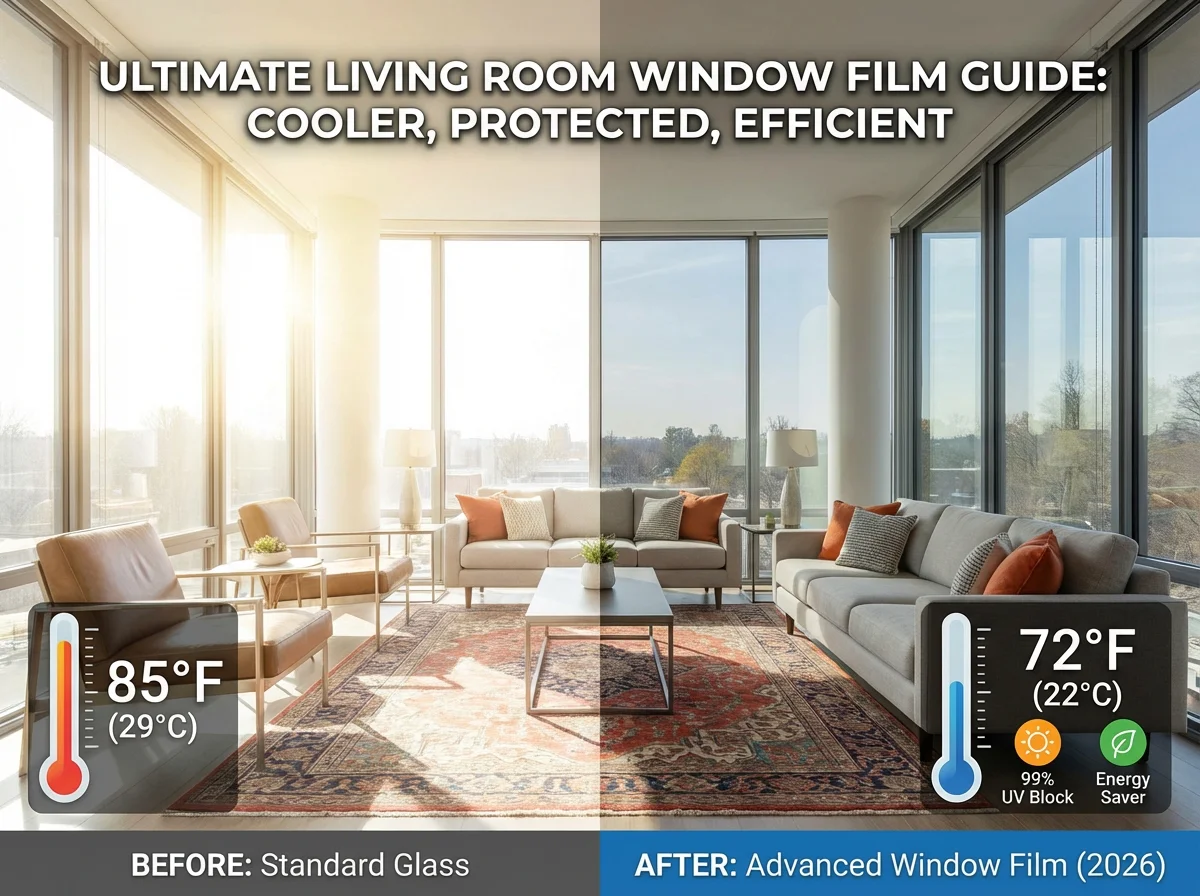
For most living rooms, the best window film is a ceramic or spectrally selective film with a visible light transmission (VLT) of 40 to 70%. It cuts infrared heat and up to 99% of UV, reduces glare and keeps the glass looking nearly clear. If privacy matters more than the view, a frosted film is the better choice. Reflective films give the most heat rejection but change the look of the room the most.
A living room is where sun, furniture and daily life meet: large south and west-facing windows, sofas and rugs that fade, and a television that glares by mid-afternoon. This guide helps you choose a film that fits that room, and explains the specifications that actually matter.
Which film suits which living room problem?
| Problem | Best film type | Why |
|---|---|---|
| Room too hot in summer | Ceramic or spectrally selective | Blocks infrared heat while staying almost clear. |
| Furniture, flooring or art fading | Ceramic or spectrally selective (up to 99% UV) | Cuts UV and some heat, the main causes of fading. |
| Glare on TV or screens | Any solar film with VLT of 40 to 60% | Reduces brightness without darkening the whole room. |
| Privacy from neighbours or the street | Frosted film | Hides the view in while letting through roughly 70 to 80% of daylight. |
| Maximum heat rejection | Reflective | Mirror-like layer bounces solar energy away; affects the look inside and out. |
| Cold rooms in winter as well | Low-E | Reflects indoor heat back into the room in cooler months. |
How do the film types compare for living rooms?
| Film type | How it works | Light and look | Best for |
|---|---|---|---|
| Ceramic | Nanoparticles block infrared and UV without a dark tint. | Clear to lightly tinted. | Most living rooms: heat, UV and views. |
| Spectrally selective | Multi-layer coatings reflect infrared and pass visible light. | Very clear, often almost invisible. | Rooms where brightness and views matter most. |
| Low-E (low emissivity) | Reflects heat in both directions. | Clear. | Year-round comfort, cooler months included. |
| Reflective (one-way) | Metallic layer reflects sunlight. | Mirror-like from outside in daylight. | Maximum heat control and daytime privacy. |
| Frosted | Diffuses light and hides the view. | Soft, translucent. | Privacy, bathrooms, entrance glass. |
| Dyed | Dye absorbs light and some heat. | Darker, can fade over time. | Low cost, limited long-term performance. |
| Metallised | Metal particles reflect heat. | More reflective, can be darker. | Strong heat control where the look is secondary. |
The US Department of Energy notes that silver, mirror-like films are typically more effective at heat rejection than coloured, more transparent ones. The trade-off is appearance, which is why most homeowners choose ceramic or spectrally selective film for living rooms.
Which specifications should you compare?
Total solar energy rejected (TSER) tells you how much of the sun’s total energy the film keeps out. As a rule of thumb, 50% or more is a solid result and premium films reach 70% or more. Some data sheets quote the solar heat gain coefficient (SHGC) instead, where a lower number is better.
Visible light transmission (VLT) is how much daylight passes through. For living rooms we usually suggest 40 to 70%. Below that, the room starts to feel dim, especially on overcast days.
UV rejection is the share of ultraviolet blocked. Quality films block up to 99%, which matters for furniture, flooring and artwork.
A film with a high VLT can still reject a lot of heat if it targets infrared. That is why a lighter ceramic film often outperforms a darker dyed one. Our guide to how window film blocks heat explains the science.
What will window film do for your living room?
- Cooler rooms. On the Costa Blanca, summer afternoons regularly pass 35°C. Treated rooms are typically 8 to 12°C cooler than untreated ones at the peak.
- Lower cooling costs. In our installations, treated rooms typically use 20 to 30% less cooling energy, with payback of 3 to 5 years.
- Less fading. Up to 99% of UV is blocked, which slows fading of sofas, flooring and artwork. See our guide to UV protection for furniture and interiors.
- Less glare. Screens and televisions are easier to see without closing the curtains.
- More privacy and security. Frosted or reflective film limits the view in, and security film can hold glass together if it breaks. See home security films for windows and doors.
What should you check before choosing?
Your glass. The US Department of Energy warns that films which mainly absorb heat can stress the seals of insulated glass units, and many manufacturers limit or exclude warranty cover for them. Film can still work on double glazing, but it must be matched to the glass. We check this before recommending a film.
Orientation. The Department of Energy notes that east- and west-facing windows can benefit more from film. If your living room faces west, afternoon sun is the main problem.
How you use the room. A room used mostly in the evening may not need the same VLT as a home office. Tell us when the room feels worst and we will recommend accordingly.
Installer experience. Bubbles, creases and edge gaps are easy to make on large panes. Our guide to why expert installation matters explains what to look for.
Should you fit it yourself or use a professional?
Small, flat panes can be done DIY with patience. Large living room windows, sliding doors and curved or framed glass are much harder, and a failed attempt is often more expensive to correct than a professional job. Some manufacturers only honour their warranty for professional installation. A professional survey also tells you whether your glazing suits the film you want. We do not publish prices because they depend on glass area, film type and access, so we quote after a survey.
How is the film applied and looked after?
Installation is usually completed in a day for a typical living room. The glass is cleaned and the film is applied wet. Small water pockets can appear for a few weeks as it cures and then disappear. Wait about a month before cleaning the inside surface, then use a soft cloth and an ammonia-free cleaner. Quality film typically lasts 15 to 20 years.
Frequently asked questions
What is the best window film for a living room on the Costa Blanca?
For most living rooms, a ceramic or spectrally selective film is the best choice. It blocks a high share of infrared heat and up to 99% of UV while keeping the room bright, so the glass still looks almost clear. Reflective or darker films reject more light, which usually suits offices better than living spaces.
Will window film make my living room dark?
Not if you choose the right one. For living rooms we normally recommend a visible light transmission (VLT) of 40 to 70%. At the upper end the glass looks almost clear. Frosted privacy film still lets through roughly 70 to 80% of daylight while hiding the view in.
Does window film stop furniture and flooring fading?
It slows fading a lot, but nothing stops it completely. Quality films block up to 99% of UV, which is a major cause of fading. Visible light and heat also contribute, so a film that blocks heat as well as UV protects best.
Is window film safe for double-glazed windows?
Usually yes, but the film must suit the glass. The US Department of Energy warns that films which mainly absorb heat can stress the seals of insulated glass units, and many manufacturers restrict warranty cover. We check your glazing against the manufacturer’s guidance before we recommend a film.
How much can window film cut my cooling costs?
It depends on glazing area, orientation and the film. In our own installations on the Costa Blanca, treated rooms typically use 20 to 30% less cooling energy. Payback from energy savings is usually 3 to 5 years.
How long does living room window film last?
Professionally installed quality film typically lasts 15 to 20 years in Mediterranean conditions. Low-cost or DIY film often fails sooner, with bubbles, discolouration or peeling edges.
Can window film give privacy without blocking the light?
Yes. Frosted film hides the view in during the day, and reflective film does the same from outside in bright daylight. Frosted film keeps the room bright. Reflective film can flip at night, when lights on inside make the room visible from outside.
Should I fit living room window film myself?
Small flat panes can be done DIY, but large glass, bubbles, creases and edge gaps are common problems, and some manufacturers only honour the warranty for professional installation. For large living room windows and sliding doors we recommend professional fitting.
Get a recommendation for your living room
Tell us which windows face the sun and what bothers you most. We will survey the glass and recommend a film. Contact Solar Guard for a free quote or call +34 667 278 108.
Related guides
- How window film blocks heat
- Benefits of home window tinting
- Frosted and solar reflective film
- Indoor UV exposure risks
- Window tinting in Torrevieja, Quesada and Calpe
Sources
- US Department of Energy, Energy-efficient window treatments: film performance, orientation, insulated-glass and warranty cautions.
- Performance figures and energy examples come from Solar Guard’s own installations and manufacturer data sheets.