
By Dean Newbury, Solar Guard SL. Window film installer on the Costa Blanca since 2002. Published 2 February 2026. Updated 10 November 2026.
UV-blocking window film stops more than 99% of UVA and UVB light at the glass, which protects your furniture, floors, fabrics and skin from UV damage while the room stays bright. Ordinary window glass filters most UVB but lets UVA through, so the sun on your sofa is still doing damage behind a closed window. This guide explains what UV does indoors, what to look for in a film, and what film cannot do.
Key takeaways
| Question | Short answer |
|---|---|
| Does glass stop UV? | It filters most UVB but lets UVA pass (Skin Cancer Foundation). |
| How much can film block? | More than 99% of UVA and UVB for a proper UV film. |
| Will film stop fading completely? | No. Visible light and heat also fade materials, so film slows fading a great deal but cannot stop it. |
| Will the room go dark? | Not with a clear, ceramic or spectrally selective film. For living rooms we usually suggest 40 to 70% visible light transmission. |
| How long does it last? | Typically 15 to 20 years. Our films carry a 10-year manufacturer’s guarantee. |
What does UV do to a room?
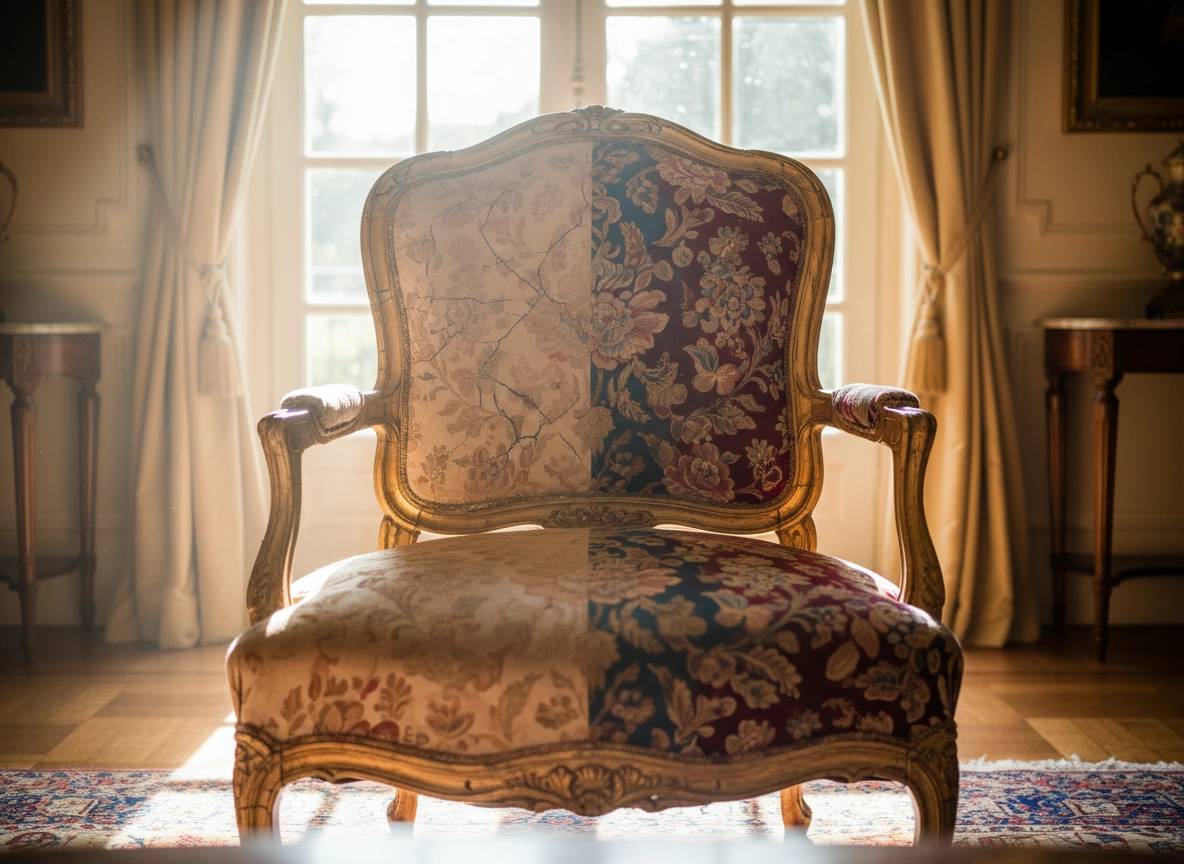
UV light breaks down the chemical bonds in dyes, pigments and finishes. In a sunny room that shows up as bleached fabrics, yellowed or patchy wooden floors, dried and cracked leather, and faded artwork and photographs. The damage builds up slowly, so it often goes unnoticed until one side of a sofa or one patch of floor is clearly different from the rest.
The Skin Cancer Foundation notes that UVA passes through windows and clouds all year round. On the Costa Blanca the sun is strong for most of the year, and rooms with large south and west-facing glass take the most.
UV is not the only cause. Visible light and heat also fade materials, and so do humidity, cleaning chemicals and the quality of the dye. That is why a good film cuts UV and heat together. Our guide to how window film blocks heat explains the heat side.
How does UV window film work?
UV window film is a thin, optically clear layer bonded to the inside of the glass. It absorbs or reflects UV wavelengths before they enter the room. Some films do only this and are almost invisible. Solar control films add heat and glare reduction, using ceramic, spectrally selective or reflective layers.
The Skin Cancer Foundation says UV window film can block more than 99% of UVA and UVB, and its Seal of Recommendation goes only to products that show data for 99% or more. It advises looking for films sold as “UV window film”, “solar window film” or “window tint”, because many other films are for design or darkening only.
Which UV film should you choose?
| Film type | UV blocking | Heat and glare | Look | Best for |
|---|---|---|---|---|
| Clear UV film | 99%+ on quality films (check the data sheet) | Little heat reduction | Almost invisible | Protecting furnishings while keeping the view |
| Ceramic | 99%+ on quality films | High infrared rejection | Clear to lightly tinted | Most homes |
| Spectrally selective | 99%+ on quality films | High infrared rejection | Very clear | Bright rooms and views |
| Reflective (for example R Silver 20) | 99% UV, 78% heat entry, 82% glare | Strongest heat and glare control | Mirror-like from outside in daylight | Maximum heat control and daytime privacy |
| Frosted | Varies, check the data sheet | Some glare reduction | Translucent | Privacy rather than UV protection |
For help choosing for a particular room, see our guide to window film for living rooms.
What can UV film not do?
- It cannot stop fading completely, because visible light and heat also play a part.
- It cannot reverse fading or damage that has already happened.
- It does not replace sunscreen, shade or sunglasses outdoors.
- Decorative and privacy films may not block UV well, so check the specification.
Which materials benefit most?
- Wooden floors and furniture. UV bleaches and yellows finishes and timber. Film reduces the UV that reaches them.
- Leather. Sun and heat dry leather out and can crack it.
- Fabrics, curtains and rugs. Dyes fade quickly in strong sun, and natural fibres are no exception.
- Artwork and photographs. Prints and pigments fade, so keep valuables away from direct sun even with film.
Film works best alongside simple habits such as rotating furniture and rugs. See how to prevent furniture and flooring fading for the full list.
Is UV film safe for double glazing?
Usually, but the film must suit the glass. The US Department of Energy warns that films which mainly absorb heat can stress the seals of insulated glass units, and many manufacturers limit or exclude warranty cover for them. We check your glass against the manufacturer’s guidance before recommending a film.
Should you fit it yourself?
Small flat panes can be done with patience. Large living room windows, sliding doors and conservatory glass are much harder, and bubbles, creases and edge gaps are common on DIY jobs. Some manufacturers only honour their guarantee for professional installation. We survey the glass, recommend a film and fit it. Our guide to why expert installation matters explains what to look for.
Frequently asked questions
Does window film block UV rays?
Yes. A proper UV or solar window film blocks more than 99% of UVA and UVB light, according to the Skin Cancer Foundation. Check the data sheet, because decorative films are often sold for looks or privacy and make no UV claim.
Does ordinary window glass block UV?
Ordinary glass filters most UVB but lets UVA through, and UVA also passes through clouds all year round. That is why furniture fades and skin can be exposed behind a closed window.
Will UV film change how my windows look?
Clear and spectrally selective films look almost invisible from inside and outside. Reflective films look mirror-like from outside in daylight. We can show samples on your own glass.
Does UV film protect wooden floors and rugs?
Yes, it reduces the UV reaching them, which slows fading and yellowing. Visible light and heat also contribute, so no film stops fading completely. See our guide to preventing furniture and flooring fading.
How long does UV window film last?
Professionally installed quality film typically lasts 15 to 20 years in Mediterranean conditions, and our films carry a 10-year manufacturer’s guarantee.
Can UV film be fitted to double-glazed windows?
Usually yes, but the film must suit the glass. The US Department of Energy warns that films which mainly absorb heat can stress the seals of insulated glass units, and some manufacturers restrict their cover. We check your glazing first.
How much does UV window film cost?
The price depends on the glass area, the film and how easy the glass is to reach, so we quote after a survey. Contact us for a free quote.
Get a recommendation for your property
Tell us which rooms get the sun and what you want to protect. We will survey the glass and recommend a film. Contact Solar Guard for a free quote or call +34 667 278 108.
Related guides
- Preventing furniture and flooring fading
- Indoor UV exposure and your health
- How window film blocks heat
- Window film for living rooms
- Window tinting in Torrevieja, Quesada and Calpe
Sources
- Skin Cancer Foundation, UV window film and tint: glass filters most UVB but not UVA; UV film can block more than 99% of UVA and UVB.
- US Department of Energy, Energy-efficient window treatments: film and insulated-glass cautions.
- Film performance figures and guarantee terms come from Solar Guard’s installations and manufacturer data sheets.